Nurture Pathway Explained
Who are our learners?
The children are sensory beings whose primary experience of life, and meaning within it, is sensory. Children are all at very early stages of cognitive, physical, social and emotional development and are working within the Engagement Model.
In addition, these pupils are likely to experience more significant difficulties with sensory processing as well as communication & language than pupils in other pathways. Most Nurture pupils will communicate non-verbally.
Children with complex learning difficulties must learn ‘how to be’ as a necessary precursor to learning ‘how to do’.
The nurture curriculum is underpinned by
- The Engagement Model
- The Early Years Framework
- The Reggio Approach
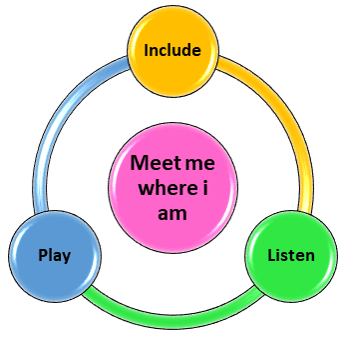
Include
- A pupil-centered approach that focuses on abilities rather than disabilities, enabling the pupils’ achievements and progress to be measured over time
- A curriculum that develops life skills – opening up their world, developing resilience, independence and pupil voice
Play
- A multi-sensory curriculum that stimulates, challenges and engages the children
- An enabled space, incorporating exploratory play in a controlled environment
- A curriculum that is designed to create curiosity
Listen
- A curriculum where children learn to be strong and independent through the development of positive relationships
- A total communication environment so that all pupils can communicate their wants and needs using their chosen voice
Pathways Explained
Oaklands’ pathway structure is designed to create class groups of similar pupils based on cognitive stage and learner profile of strengths, as well as needs. Therefore, as our cohort changes, we change the pathway structure.
Our pathway structure is also affected by developments in our pedagogy and curriculum based on the best educational evidence available. As a result of embedding the Mastery approach to learning and the OPAL ladder small steps assessment system, we now have much more information about how each pupil learns and their areas of strength and difficulty, which allows us to more closely group pupils.
This means that we have further refined our pathways so that we can more finely differentiate our teaching to meet pupils at their point of learning.
In general, we try to keep children in each class within the same Key Stage but as cognitive stage is a more important factor in our unique pupils’ learning than their actual age, this may not always be the case. As we have so few EYFS admissions, pupils in that age range will always be taught with Key Stage 1 peers.
 Building Foundations for Fulfilling Futures