Independence & Life Skills
At Oaklands, independence and life skills are nurtured through supportive, real-life learning experiences that help children grow in confidence and self-awareness. Through consistent modelling and guidance, pupils are given regular opportunities to practice every day routines to build their ability to complete everyday tasks, helping to develop their confidence. They develop important skills such as dressing, feeding and toileting through structured play and practical activities. Over time children increase their independence and life skills needed to navigate both school life and the wider world.
Through our Educational Visits Curriculum, children experience as much of the world as possible and have opportunities to engage with their community and beyond in meaningful ways. Our curriculum ensures that our pupils can gain a range of skills and experiences in the wider world, including:
- How to communicate and regulate themselves in less familiar and public spaces
- Road safety & awareness
- Who is a trusted adult and helper
- What the local community has to offer
- How to keep themselves safe in less familiar and public spaces
- What is expected behaviour in different settings
By engaging in well planned educational visits across their time at Oaklands, we hope all of our unique pupils can enjoy their communities and the memorable enrichment experiences we offer. Educational visit learning is tailored to the needs of children in each pathway and broken down into progressively challenging stages, to ensure that key skills are repeated and consolidated to increase future independence.
Developing food preparation and cooking skills is an important part of pupils’ learning. Specific Pathway cooking Curricula outline the skills pupils learn on each Pathway, building on these as time goes on and always working towards independence.
SoSAFE! Is a system designed to help children with SEND to be able to learn about keeping themselves safe, appropriate ways to act and accept support in different types of relationship, and what makes a positive healthy relationship. It uses a standardised framework of symbols, visual teaching tools and concepts and provides visual communication tools for reporting physical or sexual abuse so that young people can advocate for themselves. It is important to stress that SoSafe! is not a sex education tool.
At Oaklands, we know that all of our children are vulnerable because of their special educational needs, in particular how they communicate and how they understand interaction with others and relationships. Through our teaching, including using SoSafe! Tools, we endeavour to build their understanding and awareness of how to keep themselves safe at all times.
Cooking Curriculum
Sensory food play and cooking are essential components of the curriculum in special schools for several reasons:
- Development of Skills:They help children develop essential life skills such as measurement, reading, and following recipes, which are crucial for daily living and independence.
- Cognitive and Emotional Development:Cooking and sensory play stimulate cognitive development by encouraging problem-solving and creativity, and it also helps in emotional development by providing a sense of accomplishment and satisfaction
- Positive Attitude Towards Food:These activities promote a positive attitude towards food and eating, which is vital for children’s overall health and well-being
- Engagement and Learning:Sensory food play and cooking engage children’s senses and encourage them to explore and learn about food in a fun and interactive way
- Support for Children with Special Needs:These activities are particularly beneficial for children with additional needs, as they provide a structured and supportive environment to learn and grow
Incorporating sensory food play and cooking into the curriculum not only enhances the learning experience but also fosters a love for food and a healthy eating habit in children
Educational Visits
At Oaklands we want our children to experience as much of the world as possible and to be able to engage with their community and beyond in meaningful ways. Our Independence & Life Skills Curriculum ensure that our pupils can gain a range of skills and experiences in the wider world, including:
- How to communicate and regulate themselves in less familiar and public spaces
- Road safety & awareness
- Who is a trusted adult and helper
- What the local community has to offer
- How to keep themselves safe in less familiar and public spaces
- What is expected behaviour in different settings
By engaging in well planned educational visits across their time at Oaklands, we hope all of our unique pupils can enjoy their communities and the memorable enrichment experiences we offer. Educational visit learning is tailored to the needs of children in each pathway and broken down into progressively challenging stages, to ensure that key skills are repeated and consolidated to increase future independence.
Nurture Pathway
Learning to transition to different areas around school is the first stage of working towards being able to experience new places beyond the school gates. This is done through repetition and use of songs, as well as motivators and visuals to support children to understand where they are going and to have access to resources to be able to be regulated with support from staff. Over time, we support children in working towards independent self-regulation. As children develop their ability to transition to different places within school without becoming dysregulated or anxious, support is gradually reduced.
Once children are able to confidently transition around school, we begin to prepare them for experiences outside of school. This involves becoming comfortable and familiar with safety equipment e.g., high-vis vests, wrist straps and harnesses (used only as necessary and according to thorough Risk Assessments). We also prepare children for what they will experience outside school with photographs and videos, as well as visual timetables and now/next/then boards to help them understand the structure of their experiences outside of school.
Nurture Pathway educational visits begin with exploring the local area such as the surrounding streets and Evington Park, eventually working towards accessing local amenities such as Evington Library and local shops. We expect children to be developing their self-regulation, Reading the World and communication and interaction skills as part of these valuable visits.
Willow Pathway
Unless children are new to the school, we would expect children in the Willow Pathway to have developed the skills needed to transition happily around the school. Therefore, from Autumn 2 Willow children will begin to engage in local community visits in meaningful ways. These include: playing with peers in the local park; beginning to communicate through a chosen method in local shops; finding cooking ingredients or chosen items in local shops; sharing playground spaces with other children; choosing books in the local library.
Children in the Willow Pathway continue to develop their ability to regulate in different settings whilst supported by staff, working towards independent self-regulation. Available resources to support regulation include: familiar staff; preferred objects for comfort or stimming; communication aids where appropriate; visual resources to support understanding.
Elm Pathway
Children in Elm Pathway will generally be confident to transition around school and have lots of experiences of the local community, which have developed their communication and self-regulation skills. Educational visits in the Elm Pathway extend learning in the classroom to interactions in the local community. These experiences include visiting local shops, visiting the local library, as well as Evington Park. Planned learning opportunities include finding and purchasing cooking ingredients and preferred items, finding preferred books and sharing space with others in the library, how to play safely and with others on playground equipment, as well as safely travelling on the pavement to a given destination with support. Safety equipment, such as wrist straps and harnesses, are sometimes used to support children in this pathway whilst working towards not needing these to keep themselves safe when they are outside of school.
Cherry Pathway
Children in this pathway are mostly able to effectively transition around school and have a wider range of experiences in the local community and beyond. They engage in similar educational visits to children in Elm Pathway, with more advanced skills being taught. These include planning for cooking sessions and working towards independently finding items in local shops, getting themselves a library card and taking out and returning books, and playing with friends in the playground. Cherry Pathway children are also working towards independently being able to travel to a given destination in the local community, as well as crossing roads independently.
Swimming
All of our Year 6 children take part in swimming lessons on a rota throughout the academic year. Our swimming curriculum is adapted to meet the needs of learners, with children in our Nurture, Willow and Elm Pathways developing their confidence to be in the water and independence skills in changing, and our Elm & Cherry Pathway working towards the National Swimming Awards.
Supporting families
Part of our programme to support families includes workshops on developing children’s independence skills and sharing strategies for taking their children into the community. Please see our website for dates for the workshops.
SoSafe! for healthy relationships at Oaklands School
What is SoSafe!?
SoSAFE! Is a system designed to help children with SEND to be able to learn about keeping themselves safe, appropriate ways to act and accept support in different types of relationship, and what makes a positive healthy relationship. It uses a standardised framework of symbols, visual teaching tools and concepts and provides visual communication tools for reporting physical or sexual abuse so that young people can advocate for themselves. It is important to stress that SoSafe! is not a sex education tool.
SoSafe! provides a set of conceptual tools designed to promote social safety through:
- The provision of a simplified and ‘rule-governed’ model of social reality
- Teaching the type and degree of verbal and physical intimacy appropriate with different categories of people
- Teaching strategies for moving into intimate relationships in a safe and measured manner
- Providing visual communication tools for reporting physical or sexual abuse
- Facilitating and maintaining support networks
At Oaklands, we know that all of our children are vulnerable because of their special educational needs, in particular how they communicate and how they understand interaction with others and relationships. Through our teaching, including using SoSafe! Tools, we endeavour to build their understanding and awareness of how to keep themselves safe at all times.
This relates to all children’s learning within the Interaction and Social skills elements of CISS, topics within our PSHE curriculum and the OPAL (Oaklands Pathways Assessment Ladders) for Independence & Life Skills.
Some of the key concepts in the initial stages of the SoSafe! strategy are:
- Some body parts are private and we cover them with underwear/swimwear
- Only Private helpers can touch our private parts AND consent must be given
- Children have a right NOT to consent to others’ help
These concepts relate to a variety of contexts including when needing support with hygiene, medical assistance and toileting.
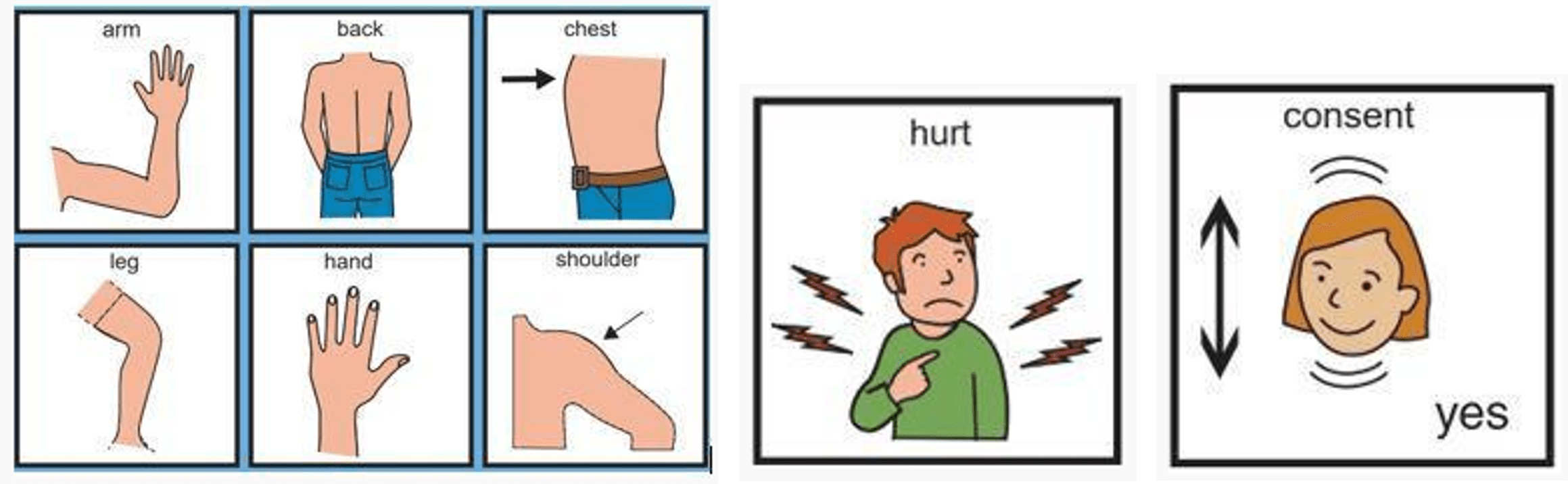
At Oaklands, we introduce consent very early on in order for children to safeguard themselves from unwanted touch and potential abuse. We ensure that children can use a range of ways to say Yes/give consent (Makaton; head nod/shake etc) and practice this in relation to scenarios.
Key resources used to develop SoSafe! Knowledge and skills include
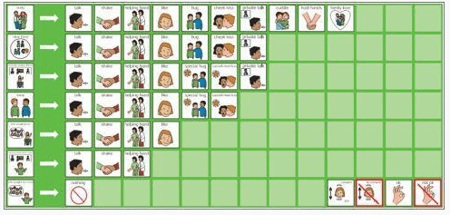
- Talk Touch Triangle – shown below)
- Steps to Relationships Book
- Visuals such as the Help Card
| Examples of objectives covered by SoSafe! in each pathway: |
| Nurture Pathway
· Learning basic body parts and beginning to identify them on themselves and others · Beginning to develop awareness of themselves and others · Beginning to learn and understand the words public and private · Understanding of the initial elements of the Talk Touch Triangle · Accepts help from familiar adults with personal care · Beginning to understand ‘yes’, ‘no’ and some boundaries · Anticipates familiar actions/activities in an exchange with an adult |
| Willow Pathway
· Knows basic body parts and able to identify them on themselves and others · Developed awareness of themselves and others · Beginning to recognise how to keep themselves safe in the school environment · Understanding of the words public and private · Understanding of the initial elements of the Talk Touch Triangle · Developing their awareness of the Talk Touch Triangle · Accepting help from familiar adults with personal care |
| Elm Pathway
· Matches clothing to body part · Highly developed awareness of themselves and others · Understanding how to keep themselves safe in school and on trips · Understanding of the words public and private · Understanding of the initial elements of the Talk Touch Triangle, aspiring to move up the triangle where appropriate · Beginning to use the Steps to Relationships Book where appropriate · Beginning to articulate when they are hurt using a preferred communication method · Attends to at least some of their toileting needs most of the time by themselves · Awareness of the boundaries set, and of behavioural expectations in the setting |
| Cherry Pathway
· Attends to all toileting needs independently · Knows how to get help in an emergency · Maintains attention appropriately to other people in familiar setting · Follows clearly defined group rules · Differentiates between friendly and unfriendly behaviour in others · Recognises sign for public toilet (Male/female) · Maintains privacy in public toilets · Identifies potential ‘safe’ person to ask for help if needed · Is aware of potential ‘stranger danger’ and knows how to respond · Understanding of many elements of the Talk Touch Triangle · Using the Steps To Relationships Book |
How is SoSafe! taught?
The units are repeated throughout the week and key concepts are reinforced at opportune moments throughout the day e.g. going to the toilet, changing for PE/swimming. This builds a solid understanding of the core SoSafe! language, so that it becomes embedded. There are a range of engaging activities used including Lotto games, flash card activities, and Social Stories©.
Some of the Key Vocabulary:
Private parts, public parts, mouth, bottom, penis, vagina, breasts, consent, private helpers, pants, vests, underwear/swimwear, private places, public places, private things/actions, bath, shower, underwear, tampons, diaries, bathroom, toilet, changing room, bedroom, male, female.
N.B. it is important that factual language is used for body parts to ensure absolute clarity about what these parts are called, and the concepts of public and private and consent. Euphemisms for body parts can be confusing and not known by everyone, so a child saying ‘my button was touched and I don’t like it’ may be misunderstood, but factual names will not be.
Examples of resources:
Further support for parents/carers:
We recognise these are difficult concepts to teach our children and it can be daunting, even embarrassing, to approach these subjects. Using principles from the SoSafe! program helps to give clarity in the messages for young people with SEND and for teaching staff and parents/carers to deliver them.
You can find more information about SoSafe! on their website: https://sosafeprogram.com/
Pyramid Educational Consultants, who deliver SoSafe! training in the UK also often facilitate free overviews on SoSafe! to give information about what it is and how it is taught, click the link below to sign up:
SoSAFE! Overview Free 1 Hour Talk (pecs-unitedkingdom.com)
If you have any concerns or questions about SoSafe! please contact Sammy Nour via the school office.
Useful Documents
SoSafe Curriculum
Oaklands Pathways I&LS Curriculum Overview