
For children to thrive, they first need to feel safe, settled and ready to learn. At the heart of this is their emotional wellbeing and helping them to develop a calm and healthy mind.
At Oaklands, Emotional Regulation and Wellbeing is part of everything we do. It runs throughout the whole school day—from the moment children arrive, through their learning, and during visits in the community.
We carefully structure each day so children know what to expect. We use clear routines, objects and symbols to support understanding and help children feel secure. Alongside this, we also teach emotional regulation skills directly, giving children the tools, they need to manage their feelings and behaviour.
We believe children learn best in an environment where they feel safe and supported, but also encouraged to try new things.
Staff regularly check in with children throughout the day to see how they are feeling. This helps us support them to stay calm, make positive choices, and access learning successfully.
Every child has a personalised toolkit that helps all staff understand their individual needs. This includes what motivates them, any sensory needs they may have, and how they communicate. This ensures that each child is supported in the best possible way across all areas of school life.
By focusing on Emotional Regulation and Wellbeing, we help children develop the skills they need for learning, building relationships, and preparing for a happy and fulfilling future.
What is Interoception?
Interoception is the body’s “inner sense.” It helps us notice how our body feels and understand what those feelings mean.
For example, when your stomach rumbles and you realise you are hungry, or when your body feels tight and you recognise you are nervous—this is interoception at work.
Our bodies are always sending signals to the brain, helping us understand how we feel, such as being tired, excited, unwell, or calm. These signals also give us clues about what is happening around us—for example, whether a situation feels safe, enjoyable, or overwhelming.
Why is interoception important?
When children can recognise their body signals, they are better able to:
- understand their emotions
- communicate how they feel
- stay calm or ask for help when needed
- take actions to feel more comfortable (for example, taking a break, having a drink, or using a calming strategy)
In simple terms, noticing how the body feels helps children learn how to regulate themselves.
What happens if interoception is difficult?
Some children, including many autistic children, may find it harder to notice or understand these body signals. This is called interoceptive difficulty or confusion.
When this happens, a child might:
- not recognise when they are hungry, tired or overwhelmed
- find it harder to understand or manage their emotions
- experience emotions that feel very big or sudden (for example, becoming very distressed or upset quickly)
This is not something children can control—it simply means they need more support to learn these skills.
How we support interoception at Oaklands
At Oaklands, we understand how important interoception is for children’s wellbeing and learning. We support children by:
- teaching them to notice and name body signals (e.g. “My heart is beating fast”)
- helping them link body feelings to emotions
- introducing simple strategies to help them feel comfortable and calm
- building awareness gradually through regular, supportive practice
We also recognise that every child is different. Interoception skills can be developed over time, and with the right support, children can learn to better understand their bodies and emotions.
Why it matters
Developing interoception helps children build the foundations for:
- emotional regulation
- positive relationships
- independence
- overall wellbeing
By supporting this important skill, we help children feel more in control, more confident, and ready to learn.
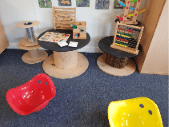
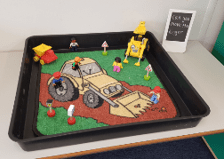
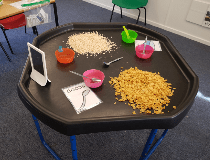
Oakey Boost is …
Engaging, Exciting and Enticing!
Oakey Boost supports …
Structures and Routines!
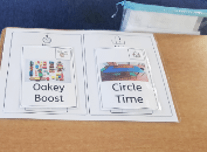
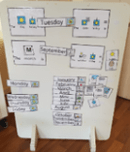
Oakey Boost promotes…
Reading, Play and Interaction
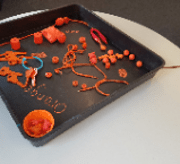
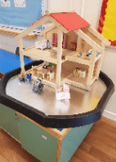
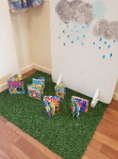
Oakey Boost helps children to…
Communicate, Connect and Regulate their Emotions
What is Oakey Boost?
Oakey Boost is a session that is designed to support children transition into school. It is an opportunity for staff to ‘check in’ with each child, through observations, interactions and communication.
When is Oakey Boost on the timetable?
Everyday 8.45am – 9.15am (approx.)
What do children do during Oakey Boost?
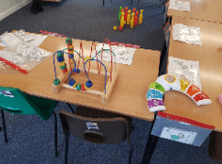
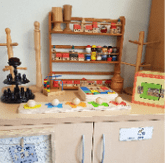
This varies between classes and pathways, however, the session includes a mixture of activities and resources that entice the children into the classroom, such as preferred objects (motivators), sensory equipment (such as gym balls and spinners) and play interaction toys. During this time children are free to access any of the resources and activities that are on offer, they may also use this time to request additional items. This is a perfect opportunity to encourage communication by having visuals available, such as PECS or communication boards. In addition to the above activities Oakey Boost is an ideal time to secure learning that has taken place in previous days or lessons. For example, having a tuff spot set up with the exploration activity that was used in Maths last week, or the phonics sound/s of the week activity.
What do the staff do during Oakey Boost?
Connect! Staff use this time to build relationships with the children, engage with them in their chosen activity, as well as modelling play and positive interactions. It may also be an opportunity for some 1:1 work, supporting learning that has taken place in previous lessons. Oakey Boost is also a time when staff check-in with how children are feeling. They will use the language of Zones of Regulation to help children identify how they are feeling, which zone they are in and what emotional regulation tool they may need to help them.
Sensory Breaks
A Sensory Break is a designated portion of time that may allow a child to deescalate from the sensory stimulation of the classroom setting. Sensory breaks also are beneficial for children that benefit from additional movement or deep pressure input opportunities to help with focus, attention, and learning.
Why do children need sensory breaks?
- They get anxious and need to calm their nervous system down (yellow zone/red zone)
- They cannot filter out irrelevant sensory information and gets overwhelmed by all the sensory input from his environment (yellow zone/red zone)
- They have low alertness because they are not getting enough sensory input/ feedback when sitting (Blue Zone).
- They have reduced body awareness and postural stability and this affects their ability to sit upright and concentrate (Blue Zone).
- They are seeking sensory input in a mal-adaptive or disruptive way and would benefit obtaining sensory input via more appropriate means.
- The zones of regulation can be used to support children in understanding and recognizing their states of alertness
What is a sensory break?
- An opportunity to escape or attain sensory stimulation
- Sensory activities usually focus on the three core sensory systems: vestibular, proprioceptive & tactile
- Provide enhanced sensory input
- May include a combination of sensory input
- Sensory break may happen outside or inside the classroom. In general, any activity or action which stimulates or removes sensory input from a sensory system is a sensory break
- Deep Pressure – Tends to be calming and can dampen down sensations in other sensory systems.
- Light touch and messy play tend to be alerting
- Vibration – Tends to be alerting
- Vestibular- Tends to be alerting
- Proprioception – Tends to support the child to pay attention and to focus (calming and alerting)
When and where to provide sensory breaks?
- Breaks can be scheduled or unscheduled.
- Sensory breaks can be whole class or individualised depending on the needs of the child.
- A child can have sensory material at their desk at all times
- Whole class Breaks at the desk can be unscheduled, if the class teacher sees that the class are becoming restless, lethargic or losing concentration – use of the zones of regulation visuals may be useful to indicate to the class why they are taking a sensory break
- Sensory breaks are proactive not reactive
Sensory breaks
Sensory breaks should be well structured with a clear start and finish e.g. use of timers and visuals to illustrate this.
Whole class opportunities
In between sessions – tidy up time can be used as a sensory break – asking children to carry items can support proprioception. Movement around the class allows for fidgets to be released. Singing songs, focusing on sorting items supports a shift in focus, giving children a short ‘sensory break’. Support our children further by encouraging children to help tidy but allowing children space for free movement. This is also a good opportunity for children to make use of trampettes and yoga balls if available in class.
Structured walks – taking the whole class (or small groups) for walks around the school can be a quick way to provide change of environment and movement opportunities to support refocus. Throughout the walk, provide structure by instructing different ways to walk e.g. stomping, tip toes, hop. You can also work the upper body by modelling wall press-ups. This will support children’s development of proprioception skills and regulate senses.
Strategies:
Visual
- Encourage the children to make shapes/ letters/ numbers using different materials e.g. finger paint, clay, sand, shaving foam
- Have the children trace shapes / letters / numbers using tracing paper or another medium e.g. a board and a torch
- Make shape / letter/ number rubbings
- Colours/ Shapes / letters/ numbers could be drawn on a card and cut in half. Encourage children to find and match the pieces of card to make the shape / letter / number
- ‘Simon Says’
- Finding items of the same colour or words starting with same letter and grouping together
- Matching the picture with the word
- Have children follow mazes on paper or dot to dot on paper
- Have the children with visual sensory difficulties follow a peer around an obstacle course
- Cut around shapes, lines etc.
- Move an object around a course or shape and get the children to track the movement with their eyes some computer activities are good for this
- Dropping objects from different heights (this could be included in a lesson about gravity for example)
- Racing toy cars (this could be individualised by sticking an image of a favourite character / object on the toy car)
- Throwing and catching, rolling and passing objects
- Spotting which item has been removed from a tray of items
- Finding the letters / words in a clear basin or bottle of water with coloured glitter
- Measuring water or coloured water into jugs then pouring into items
- Measuring lengths and distances between objects, areas of the school etc.
- Change room lighting
- Light up toys
- Videos e.g. kaleidoscope https://www.youtube.com/watch?v=q2fIWB8o-bs, larva https://www.youtube.com/watch?v=14XxolEJloE,
visual therapy https://www.youtube.com/watch?v=O1hoENWoEB0
Auditory
- Singing nursery rhymes
- Rhythmic drumming https://www.youtube.com/watch?v=LznxZDX7fo4
- Auditory calming https://www.youtube.com/watch?v=72436vROzd8
Tactile
- Rubbing different textures against the skin
- Rolling over different textured surfaces
- Handling different textured objects e.g. rough and smooth numbers, letters or shapes
- Handling pets
- Feely box – a box with different textured objects or different shaped objects inside
- Pouring and measuring using different textured receptacles
- Creating patterns on the ground using wet brushes, wet sponges or squeeze bottles filled with water
- Experimenting with different temperatures, room temperature or slightly warm water, cold water and ice
- Adding objects to water to see what happens e.g. sand, glitter, stones, paper etc.
- Trying to make an object float by making a floating device out of different materials
- Arts and Crafts
- Finger painting
- Papier mache
- Licking stickers
- Blowing bubbles
- Drinking through straws or out of sports bottles
- Chewing chew toys or sweets
Proprioceptive (body awareness)
- Weightbearing activities e.g. crawling, push-ups
- Resistance activities e.g. pushing/pulling
- Heavy lifting e.g. carrying books
- Cardiovascular activities e.g. running, jumping on a trampoline
- Oral activities e.g. chewing, blowing bubbles
- Deep pressure e.g. tight hugs
Vestibular (movement)
- Jumping e.g. jumping jacks, hopscotch
- Skipping
- Lying on stomach and propping on elbows to complete activities e.g. reading a book, doing a jigsaw
- Crawling
- Wheelbarrow walks
- Lying on stomach on a scooter board and propelling with arms (avoid backward movements if children is very sensitive to movement)
- Balancing on one leg/hopping
- Swings and roundabouts
- Climbing frames
- Bouncing on a space hopper
- Jumping on a trampoline
Olfactory (smell)
- Use containers filled with different cotton balls containing essential oils, spices, smelly objects e.g. cheese and rubber bands
Gustatory (taste)
- Comparing ice cubes and frozen fruits to water and room temperature fruit
- Comparing states of matter e.g. raw egg to cooked egg
- Comparing chewy, crunchy, dry, soft and moist foods
- Blowing bubbles
- Sucking and blowing paint or coloured water from straw
- Using some musical instruments e.g. the recorder
- Blowing paper football or feather
What is Zones of Regulation?
- The Zones of Regulation is a curriculum geared toward helping pupils gain skills in consciously regulating their actions
- Helps pupils recognise when they are in different states called ‘Zones’.
- Pupils learn how to use strategies or tools to stay in a zone or move from one to another.
- Pupils explore calming techniques, cognitive strategies and sensory supports so they will have a toolbox of methods.
- Support pupils to read others’ facial expressions and recognise a broader range of emotions, perspectives about how other see and react to their behaviour, insight into events that trigger their less regulated states and when and how to use tools
Who can benefit from Zones of Regulation?
- Anybody who struggles with self-regulation
- Initially it was developed for pupils with ASD, ADHD, Tourette syndrome, ODD, selective mutism, conduct disorder and anxiety disorder.
- However, the curriculum can reach a much broader population.
- The lessons are designed to be used with pupils from 4 years old.
Critical Neurological Components
- Sensory Processing ~ Make sense of the information perceived by your sensory receptors. Difficulties in regulation can result from people not being able to filter out stimuli vs Hypo-responsive – Seeking intense input
- Executive Functioning ~ A control centre – Oversees actions and mental operation
- Our ability to Self-regulate depends on the effectiveness of these functions; planning, organisation, self-control, time management, attention, flexibility
- Emotional Regulation ~ The ability to manage our emotions. “Anyone can become angry, that is easy…but to be angry with the right person, to the right degree, at the right time, for the right purpose and in the right way…that is not easy.”
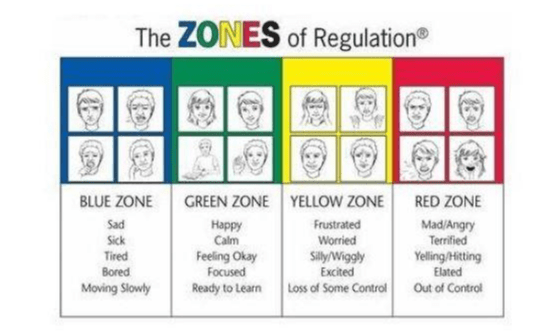
The Zones
Blue Zone: low states of alertness, when the body’s brain is moving slowly or sluggishly
Green Zone: regulated state of alertness, show control
Yellow Zone: heightened state of alertness, with some control. Slightly elevated emotions and states, starting to lose some control
Red Zone: Extremely heightened state of alertness or very intense feelings. Being overwhelmed by your own feelings and having a loss of control.
No Judgement
- Everyone experiences all of the Zones at one time or another.
- Teach children to figure out what behaviours are expected in given circumstances and determine if they need to manage their behaviours while in different Zones to meet the demands of the situation.
- Teach them tools that help them regulate and move between Zones.
- Zones is neutral, no judgement is made when helping children recognise their levels of alertness and their feelings
- Provide positive reinforcement when children are able to manage any of their Zones with expected behaviours or make efforts to use tools to regulate their Zone.
- When they are in a zone, a simple acknowledgement or labelling of that Zone will be helpful in recognising when they are there.
More information on the Zones of Regulation can be found by clicking on the link below:
The Zones of Regulation | A Curriculum For Emotional Regulation.